Red Aleppo Za'atar vs. Green Za'atar: Ingredients, Flavour & Uses
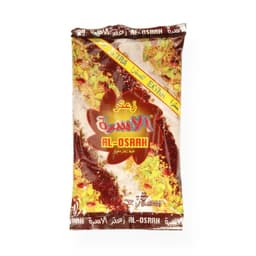
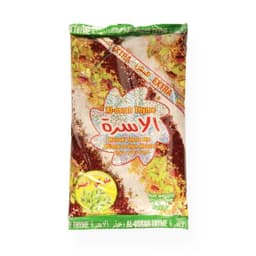
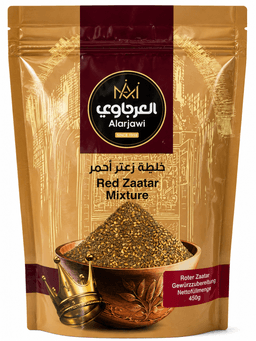
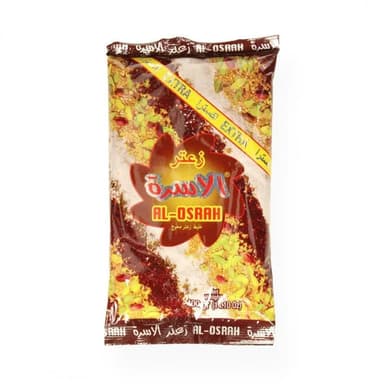
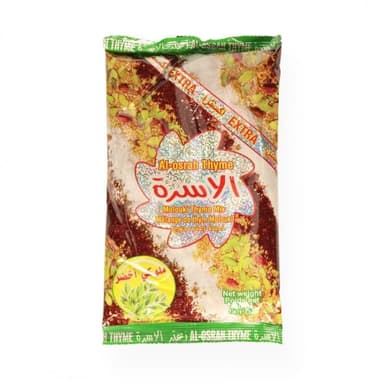
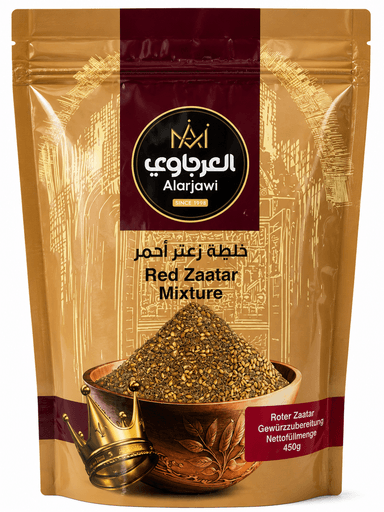
Levantine breakfast tables celebrate two distinct za'atar traditions: brick-red Aleppine za'atar built on tangy sumac, roasted coriander, anise, fennel and toasted seeds, and vibrant green Palestinian, Jordanian and Lebanese za'atar led by wild mountain thyme and sesame. Royal blends add extra toasted seeds and crunch.
Red Aleppo za'atar: Earthy toasted spices and ruby sumac
Northern Syrian red za'atar gets its warm terracotta hue from generous ground sumac and sweet red pepper rather than chilli heat. Anchored by roasted wheat or roasted chickpea flour alongside coriander, cumin, fennel, aniseed and golden sesame, it delivers a nutty, citrusy, mellow flavour loved for dipping warm flatbread in olive oil.
Green za'atar and Royal blends: Wild mountain herb intensity
Green za'atar from Palestine, Jordan, Lebanon and Damascus puts sun-dried wild Syrian oregano (Origanum syriacum) front and centre with toasted sesame seeds and sumac. Because its herbal oils bloom under high heat, green za'atar is the classic choice for oven-baked manakish flatbreads, while Royal blends boost the ratio of toasted sesame and aromatic seeds for extra breakfast crunch.
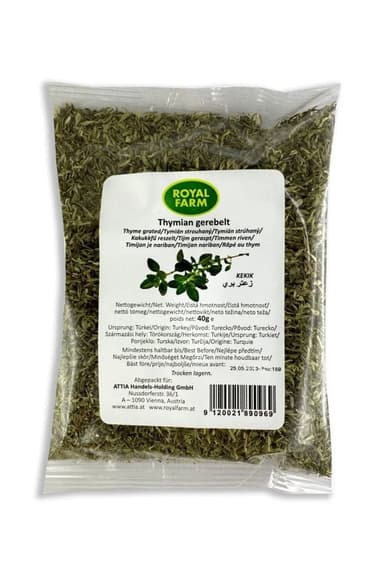
Pure coarse wild thyme leaves for roasting and herbal infusions
Whole or coarsely rubbed wild thyme without added salt or sesame works directly in savoury cooking – crushed over lemon-garlic roast chicken, baked feta and potatoes, or steeped in boiling water as a soothing aromatic herbal tea.