
Shaarieh (Vermicelli) for Arabic Rice, Soups and Sweet Puddings
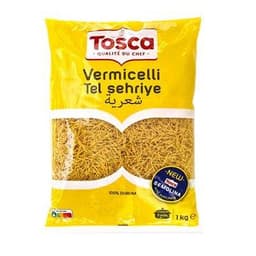

Shaarieh are fine durum-wheat vermicelli sold either cut into short strands or coiled into crisp nests. Toasted golden in ghee, they bring a nutty aroma to everyday Arabic rice and bulgur pilafs, and also star in broths and warm milk puddings.
Golden-toasted vermicelli in everyday Arabic rice and bulgur
Across Syria, Lebanon, Palestine, Jordan and Egypt, plain steamed rice is transformed into riz bil-shaarieh – the classic partner for okra stew (bamya), mulukhiya, braised white beans and yoghurt-cooked shish barak. A handful of crushed vermicelli nests is stirred constantly in melted ghee or butter over medium heat for 2 to 3 minutes until deep golden brown and nutty before rinsed Egyptian short-grain or basmati rice and boiling water go into the pot. The same technique gives coarse bulgur pilaf and Egyptian koshari their speckled look and light texture.
Quick soups and comforting sweet vermicelli
Because fine wheat strands cook in under 5 minutes, a small handful dropped into simmering chicken broth or red lentil soup adds instant body for Ramadan iftar. Shaarieh also turns into quick stove-top desserts: toasted in ghee and simmered with warm milk, sugar and cinnamon or orange blossom water in Egypt and the Levant, or cooked down with sugar, cardamom, saffron and toasted almonds as Iraqi halawat shaarieh.
Wheat vermicelli versus Asian rice vermicelli
Middle Eastern shaarieh is pasta made from durum wheat semolina, so it contains gluten. Unlike translucent Asian rice or mung-bean noodles – which cannot be browned in butter and turn soft very differently – wheat vermicelli toasts evenly in ghee and holds its bite alongside steaming rice.

