Arabic & Levantine Pantry Guide
Egyptian Rice (Short-Grain Rice): Essential for Vermicelli Rice and Stuffed Vegetables
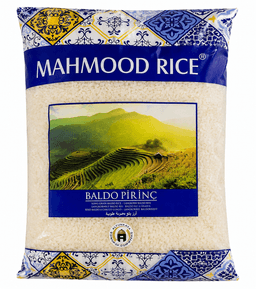
Egyptian rice (known in Arabic as ruzz masri) is a plump, pearly short- to medium-grain white rice prized across Egypt and the Levant. Rich in natural starch, it cooks up tender, glossy and flavour-packed – making it the definitive rice for vermicelli pilaf, stuffed grape leaves, koshari and maqluba.
Plump, Glossy Grains vs Long-Grain Basmati
While slender basmati rice is favoured in the Gulf for dry, separate-grained platters like kabsa and biryani, kitchens in Egypt, Syria, Lebanon, Palestine and Jordan rely on plump Egyptian short-grain rice for everyday cooking. Its rounded kernels absorb melted ghee, rich meat stocks, lemon juice and tomato broth far more deeply than long-grain rice, yielding a velvety, comforting texture while still staying distinct when properly rinsed and toasted.
From Vermicelli Rice to Stuffed Grape Leaves and Koshari
Across the Levant and Egypt, ruzz bi sha'riyeh – Egyptian rice steamed with broken vermicelli noodles toasted golden brown in ghee – accompanies nearly every stew, from mulukhiya and okra (bamya) to meatballs in tomato sauce (daoud basha). Egyptian short-grain rice is also the only traditional choice for stuffing grape leaves (warak enab), hollowed courgettes, aubergines and cabbage rolls (mahashi), as well as layered maqluba, Egyptian koshari and creamy rice pudding (ruzz bi halib).
The Secret to Fluffy Egyptian Rice: Rinsing and Toasting
For fluffy, non-sticky results, rinse Egyptian rice in several changes of cold water until the water runs clear, soak it in lukewarm water for fifteen minutes, then drain thoroughly in a sieve. After browning the vermicelli in ghee or butter, add the drained rice and stir over medium heat for two minutes so every grain is coated in fat. Pour in boiling water or broth at a ratio of 1.25 cups liquid per 1 cup rice, bring to a brief boil, then cover tightly and steam on the lowest heat for fifteen minutes.