Arabic & Levantine Pantry Guide
What is tahini? Sesame paste for hummus, sauces and dips
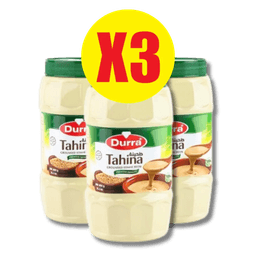
Tahini is a smooth, pourable paste ground from hulled and lightly toasted sesame seeds. It forms the creamy base of hummus, mutabbal and tarator sauce for falafel, and is also swirled with date syrup as a sweet breakfast dip.
How tahini is made and why the oil separates
To make Levantine tahini, sesame seeds are soaked, hulled, gently toasted without browning and stone-ground into a silky, ivory-coloured paste; in Iraq it is widely known as rashi. Because traditional tahini is simply milled sesame, the natural oil rises to the top when the jar sits on the shelf. Stirring from the bottom with a dry spoon brings it back to a uniform texture.
How to whisk tahini sauce and use it in cooking
When lemon juice or water first hits tahini, the paste seizes up and turns thick and grainy. Keep whisking and add splashes of ice-cold water and it quickly loosens into a pale, velvety sauce. Seasoned with garlic and salt, this tarator sauce is drizzled over falafel, beef shawarma, fried cauliflower and baked fish, or poured over lamb kofta bakes and chickpea fatteh. At breakfast, tahini is mixed with date syrup or grape molasses and scooped up with warm flatbread, and it is also the main ingredient in sesame halva.