Arabic & Levantine Pantry Guide
What is halawa (halva)? Sesame tahini confection for breakfast
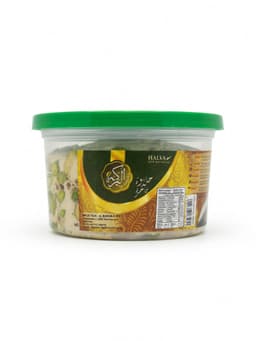
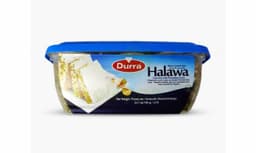
Halawa (also spelled halva) is a dense yet flaky sweet made by folding sesame tahini into whipped hot sugar syrup and soapwort extract. Across the Arab world it is eaten both at the breakfast and suhoor table with flatbread and butter or cheese, and in small slices beside tea.
How tahini halawa gets its flaky, melt-in-the-mouth texture
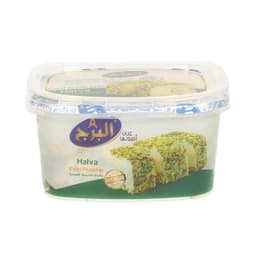
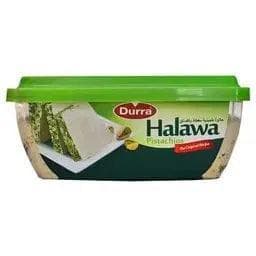
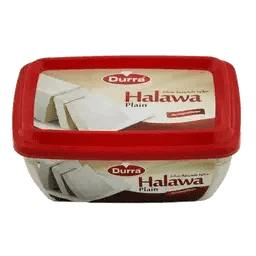
Levantine and Egyptian halawa (known as rahash in Iraq and the Gulf) is made from stone-ground sesame paste (tahini) and sugar syrup cooked to the hard-ball stage. Before the tahini is added, the hot syrup is aerated with a traditional plant extract from soapwort root (irq al-halawa), then folded by hand with wide paddles just enough to form thousands of delicate threads. The result is a block that slices cleanly with a knife yet crumbles and melts on the tongue. It is sold plain, marbled with cocoa or generously studded with whole green pistachios.
How to eat halawa at breakfast, suhoor and tea time
In Middle Eastern homes, a tub of halawa sits right on the breakfast and Ramadan suhoor tray alongside cheese, olives and labneh. It is eaten tucked into warm Arabic bread, often paired with a smear of unsalted butter, clotted cream (qishta), labneh or mild white cheese to balance the sweetness. Some people also squeeze a few drops of fresh lemon juice over their slice, or crumble halawa over warm porridge and toast.