Arabic & Levantine Pantry Guide
Fenugreek (Helba): Golden Seeds for Tea, Semolina Cake and Spice Blends
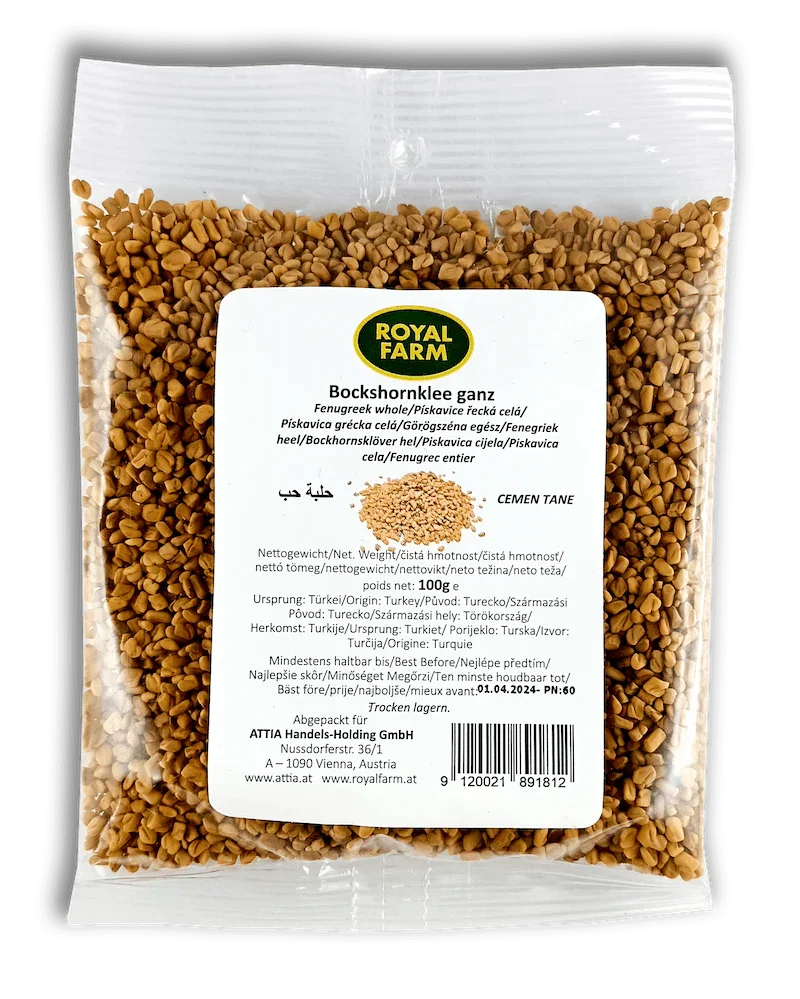
Fenugreek (known in Arabic as helba or hilbeh) produces hard, amber-gold seeds with an earthy, bittersweet aroma reminiscent of burnt sugar and maple syrup. Used whole or ground across the Middle East, it brews warming winter tea, flavours Palestinian semolina cake and seasons savoury rubs.
Aroma and Whole vs Ground Fenugreek
Botanically a legume, fenugreek bears small, angular golden seeds inside long pods. Bitten raw, the seeds are rock-hard and intensely bitter, but soaking and boiling them in water – or toasting them lightly in a dry pan – mellows their bite and unlocks a warm, nutty, maple-like fragrance. Finely ground fenugreek is a backbone of curry powders, Yemeni hilbeh dip, and the fragrant garlic-and-paprika paste (çemen) that coats cured beef pastirma.
Palestinian Fenugreek Semolina Cake (Siniyet Helba)
One of the most distinctive winter bakes of Palestine and Jordan is siniyet helba (harissat al-helba). Whole fenugreek seeds are boiled until tender, and both the golden infusion and the softened seeds are kneaded into a dough of coarse semolina, fruity olive oil, ghee, toasted sesame and nigella seeds. Scored into diamonds, baked until deeply golden and drenched in sugar syrup, the cake balances floral sweetness with a subtle, earthy bitterness.
Warming Helba Tea and Egyptian Muftaka
Across Egypt and the Levant, boiled whole fenugreek tea (yansoon wa helba) is a soothing cold-weather staple, served hot in glasses with honey, sugar or a splash of milk, with a spoon to eat the tender seeds at the bottom. In Egyptian kitchens, ground fenugreek is also simmered with blackstrap molasses, sesame seeds and peanuts to make muftaka (halba ma'ouda), a thick, glossy winter spread.