Arabic & Levantine Pantry Guide
What is labneh? Strained yoghurt cheese and how to serve it
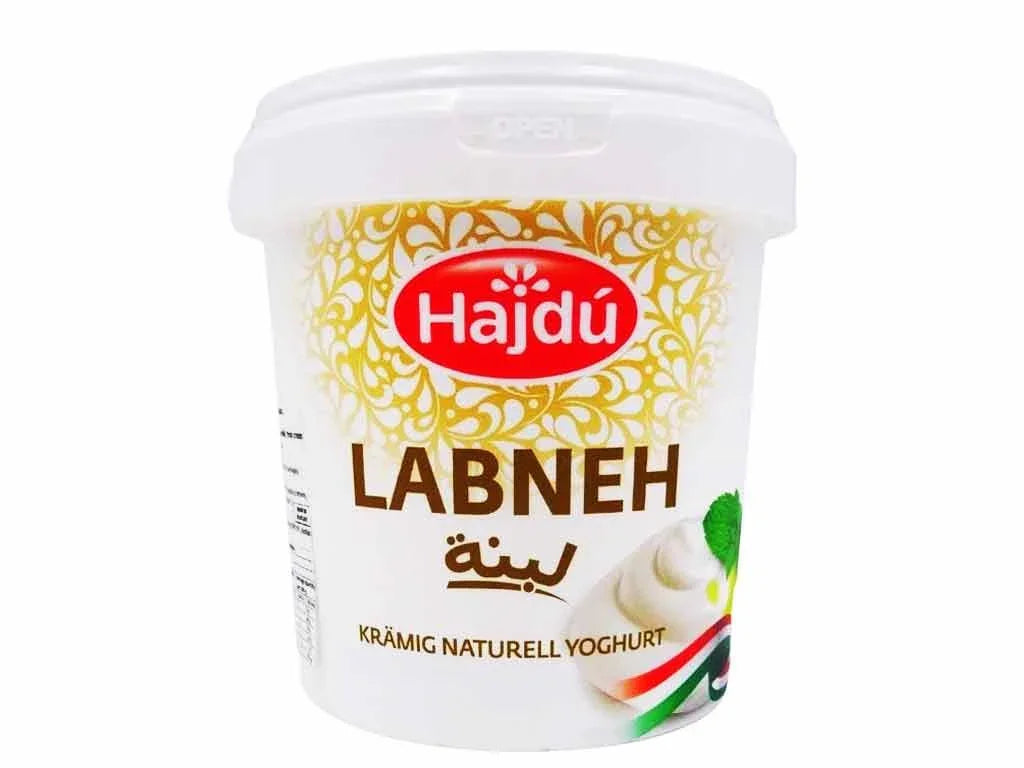
Labneh is lightly salted yoghurt strained through cloth until the whey drains away, leaving a thick, spreadable cheese with a clean tang. It is a daily staple on the Levantine breakfast and suhoor table, swooshed onto a plate with olive oil, za'atar or dried mint and scooped up with flatbread.
How labneh is made: soft spread or oil-cured balls
To make labneh, whole-milk yoghurt is stirred with a pinch of salt and hung in a muslin bag overnight so the liquid whey drips out. After a day of draining, it reaches a rich, velvety consistency thicker than cream cheese. If strained even further until firm like dough, it can be rolled by hand into bite-sized balls (labneh makbouseh) and preserved in jars of olive oil with nigella seeds, thyme or chilli flakes as part of the traditional pantry.
How to serve labneh at breakfast and mezze
In Syrian, Lebanese, Palestinian and Jordanian homes, labneh is spread across a shallow plate with the back of a spoon to form a swirl or well, then pooled with olive oil and sprinkled with za'atar, crushed dried mint, sumac or Aleppo pepper. It is eaten by tearing off pieces of warm Arabic bread alongside olives, quartered tomatoes, crisp cucumbers and hot tea. Wrapped in flatbread with cucumber, olive oil and fresh mint leaves, it also makes a quick everyday sandwich.