Arabic & Levantine Pantry Guide
Arabic Bread (Khubz Arabi / Levantine Pita): The Two-Layer Pocket Flatbread
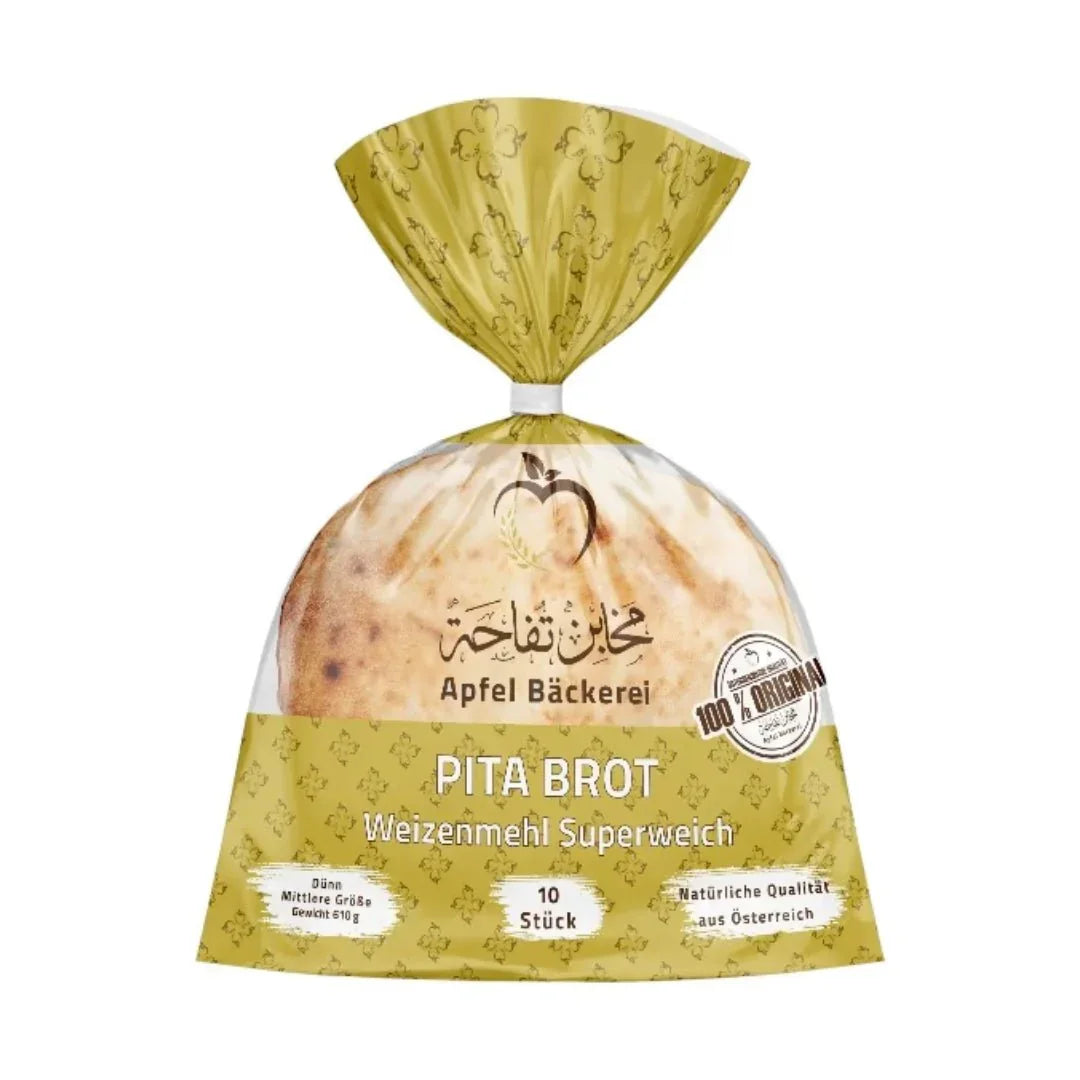
Arabic bread (known in Arabic as khubz arabi or kamaj, and in English as Levantine pita) is the everyday round, yeast-leavened wheat flatbread of the Middle East. Baked at blistering temperatures, each disc puffs up like a balloon in the oven and settles into two thin, pliable layers with a natural pocket inside.
The Science of the Puff: How the Pocket Forms
The magic of Arabic bread comes from simple ingredients – wheat flour, water, yeast, salt and a pinch of sugar – meeting intense heat. When rolled-out rounds of rested dough slide onto a 400 °C hearth or conveyor oven, the outer skin sets instantly while moisture trapped inside flashes into steam. Within seconds the flatbread inflates into a tall dome, cleanly separating top and bottom layers. As it cools and deflates, it leaves behind a soft, two-ply pocket ready to be opened, torn or rolled.
Syrian & Lebanese Thin Style vs Fluffy Egyptian Aish
Across the region, bakers tailor the thickness to local dishes: Syrian and Lebanese bakery bread ('khubz kamaj' or 'siyahi') is wide, thin-walled and supple, making it effortless to roll around falafel, shawarma or grilled kebabs, or to peel apart into two wafer-thin sheets. Palestinian, Jordanian and Egyptian loaves ('aish shami' or whole-wheat 'aish baladi' baked on bran) are smaller in diameter with a thicker, pillowy crumb for scooping saucy stews.
The 'Cat's Ear' Scoop, Grilled Arayes, Fattoush and Fatteh
At the Levantine table, fresh Arabic bread is both utensil and accompaniment: diners tear off a triangle of bread and fold it between thumb and fingers into a neat little cone – affectionately called a 'cat's ear' ('wadn al-qitta') – to scoop up hummus, mutabbal, ful medames, labneh, or olive oil and zaatar. Stuffed with spiced minced lamb and grilled, the pockets become crispy 'arayes'; and day-old loaves are snipped into squares and toasted or fried for fattoush salad, warm chickpea fatteh and lentil soup.