Arabic & Levantine Pantry Guide
What is freekeh? How it is made and cooked
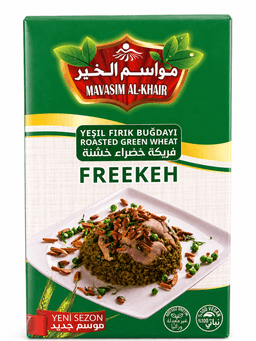
Freekeh is durum wheat harvested while still green and roasted over an open fire. It has a light smoky taste and is served in Arabic cooking the way rice or bulgur would be.
How is freekeh made and sold?
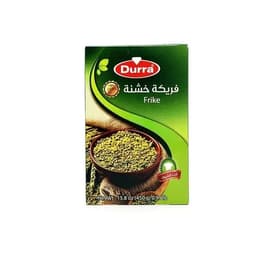
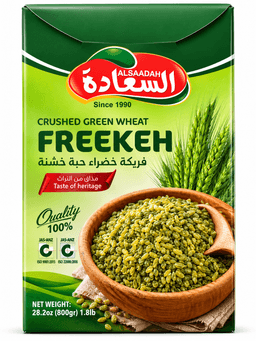
The wheat is cut in spring while the grains are still soft and green. After drying briefly in the sun, the sheaves are roasted over an open fire until the straw and chaff burn away while the moist green kernels inside toast without burning. The grains are then rubbed out, which gives freekeh its name: the Arabic word means "rubbed". It is sold as whole grain, coarsely cracked for pilafs and stuffings, or finer cracked grain for soup.
How do you cook freekeh at home?
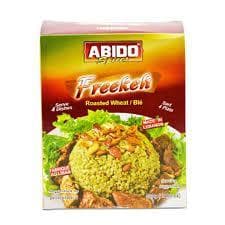
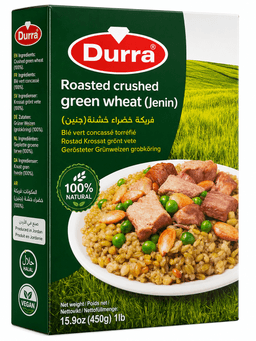
Pick over the grain, rinse it well in cold water, toast it for a minute in a spoonful of ghee and simmer it covered in chicken or lamb stock seasoned with cardamom and allspice until the liquid is absorbed. Cracked freekeh takes about 20 to 25 minutes, whole grains about 40 minutes. In Syria, Palestine, Jordan and Egypt, freekeh is served mounded on a platter beneath roast chicken or braised lamb scattered with toasted almonds and pine nuts, simmered into warming freekeh soup or stuffed into poultry.