Aleppo Laurel Soap: Traditional Craft, Curing and Household Uses
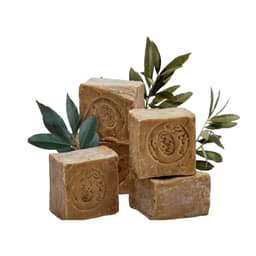
Traditional Aleppo soap is kettle-saponified from olive oil, enriched with aromatic laurel berry oil just before pouring, hand-cut into sturdy cubes and air-cured for months. Long drying gives each bar a golden-ochre outer patina while preserving a deep olive-green core inside.
Winter Kettle Saponification and Tower Curing
Crafted during the cool winter months after the olive harvest, olive oil is slowly cooked in large cauldrons for days before pressed laurel berry oil is folded into the batch. Poured onto stone floors, hand-scored into blocks and stamped, the bars are stacked in latticed towers so dry air can circulate around every face for six to twelve months.
How to Spot a Well-Aged Laurel Soap Bar
A properly cured block feels hard, dry and long-lasting: contact with air turns the surface sandy beige to warm russet, while slicing a bar in half reveals an emerald-green centre with an earthy, herbal laurel aroma free of synthetic fragrance. A thicker golden crust indicates longer air-drying and slower wear in the shower.
Everyday Bath, Wardrobe and Laundry Uses
Used daily for hands, body, shaving lather and hair, dry laurel soap blocks are also tucked into linen cupboards across the Levant to scent folded towels and woollens, or rubbed onto shirt collars as a pre-wash stain bar. Resting the bar on a slatted wooden dish between uses keeps it firm for months.