Arabic & Levantine Pantry Guide
What is pomegranate molasses? Flavour and how to cook with it
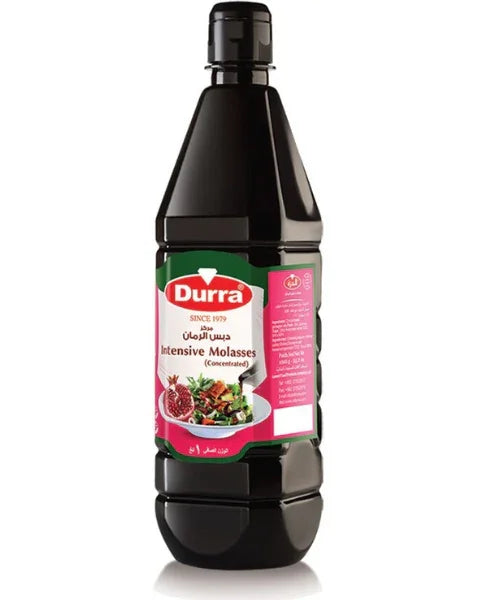
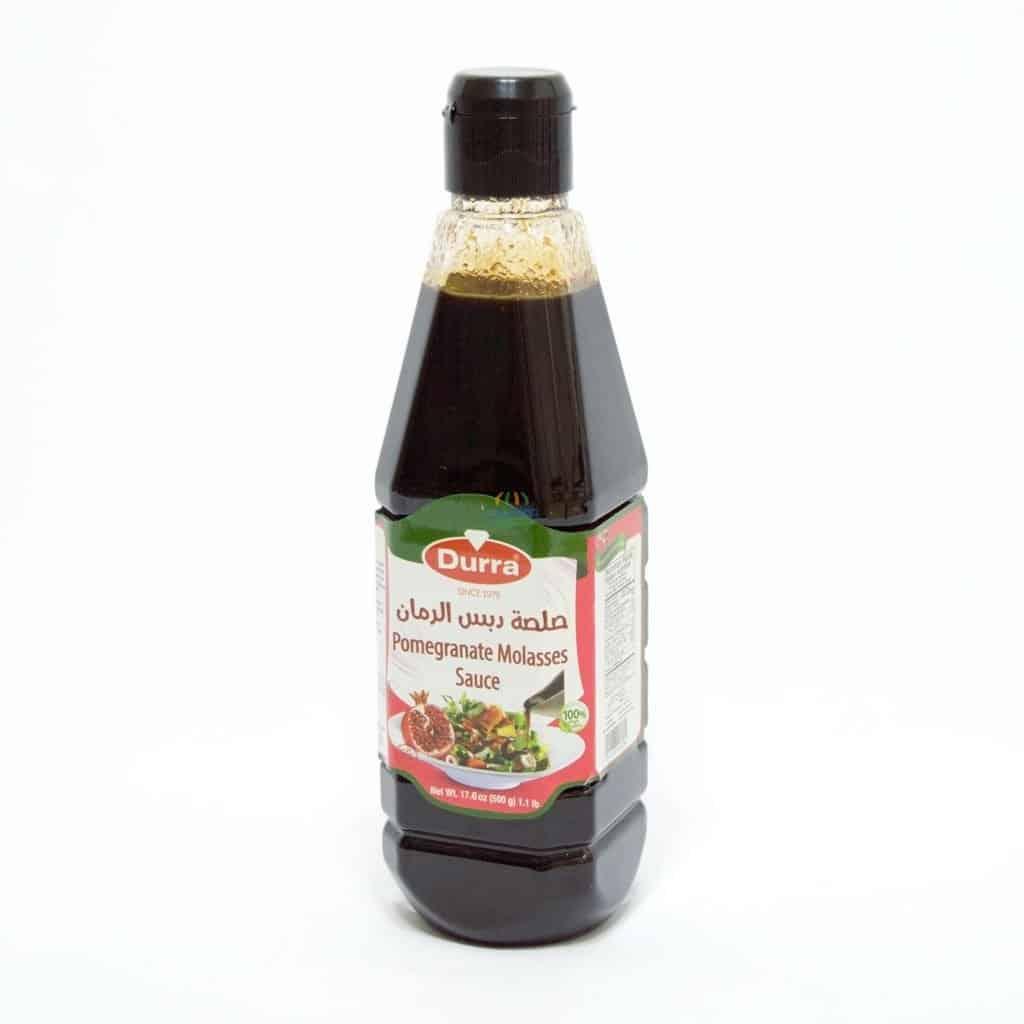
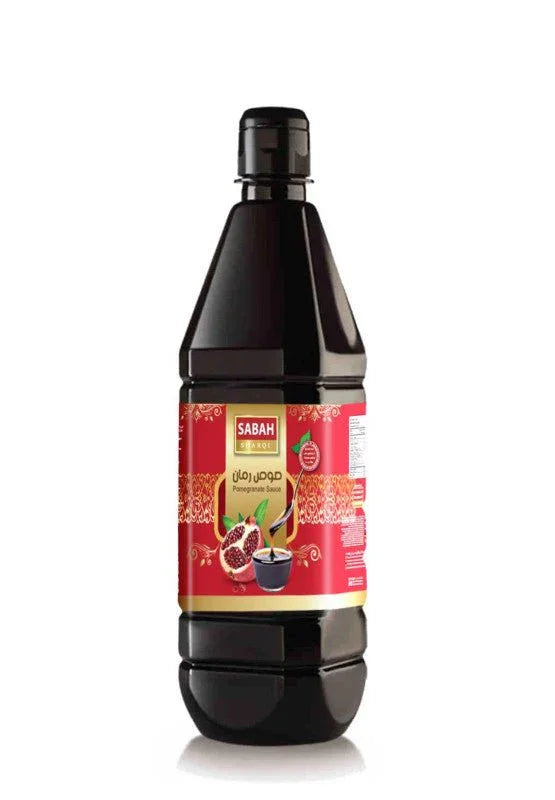
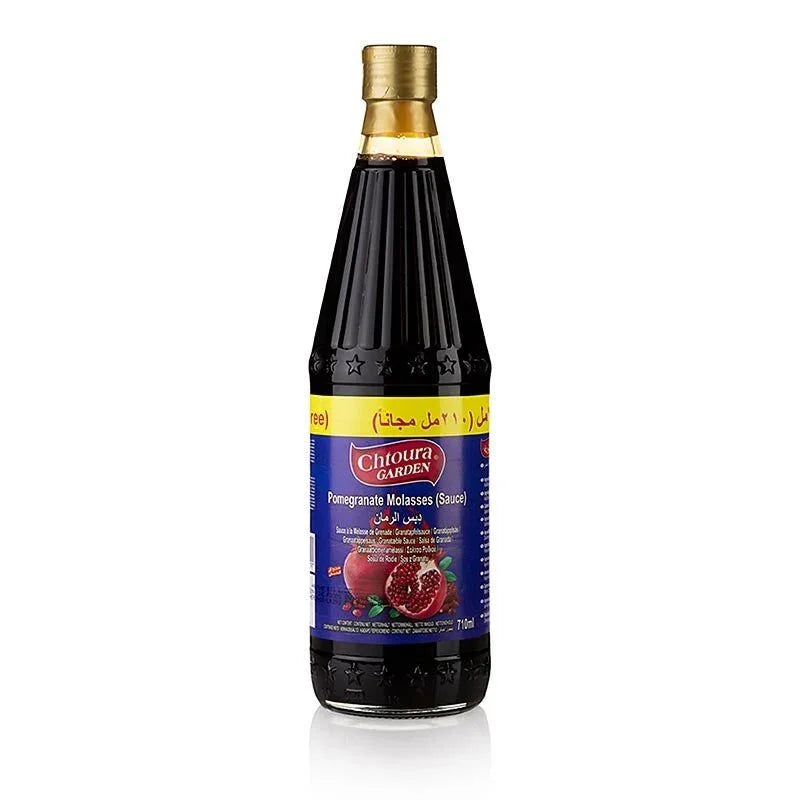
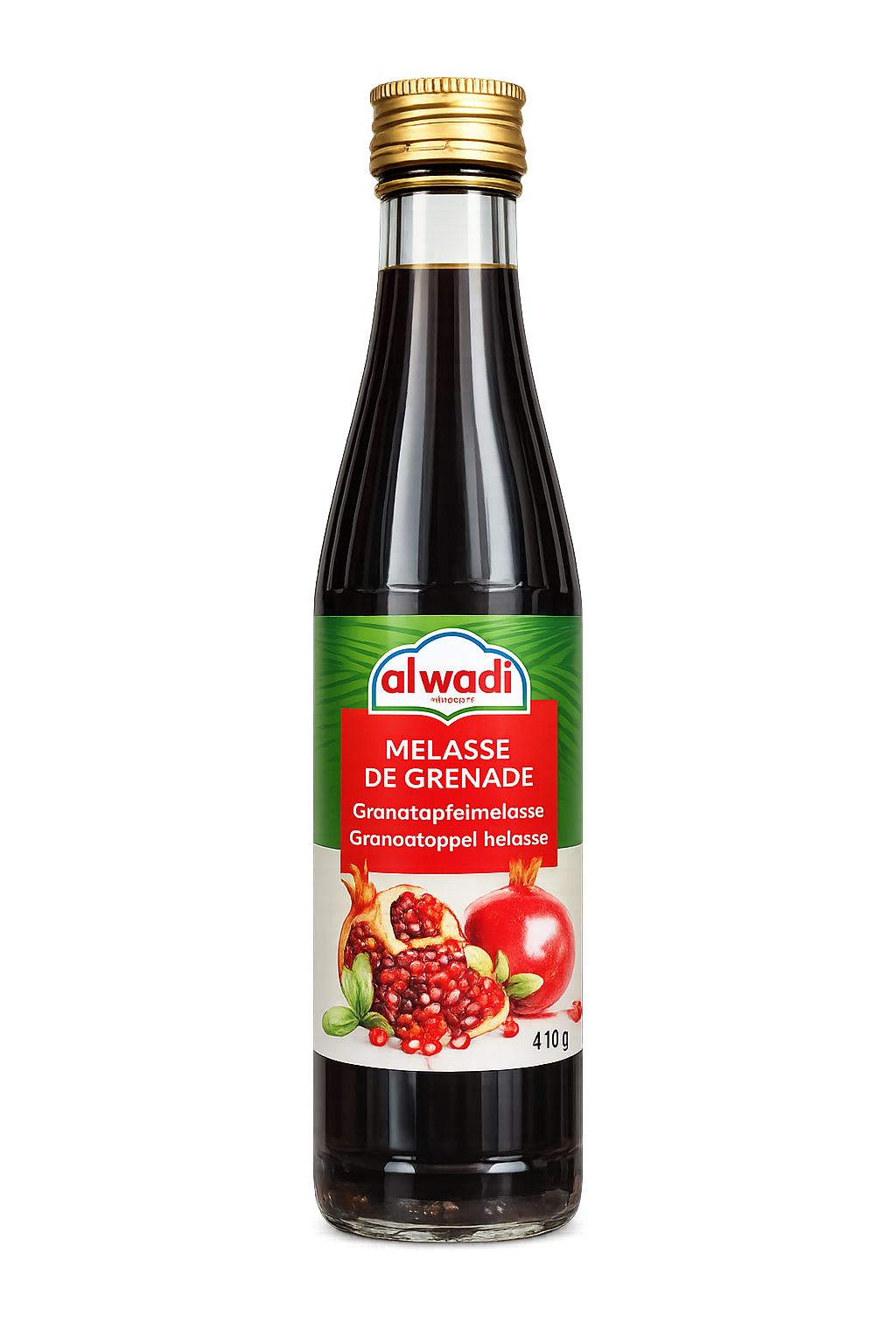
Pomegranate molasses (dibs el-rumman) is pomegranate juice simmered down into a thick, dark syrup with a sharp tangy-sweet taste. Used like an aged balsamic vinegar across the Levant, it dresses fattoush salad, flavours muhammara and mutabbal, and adds depth to stuffed vine leaves and meat dishes.
How pomegranate molasses is made
In autumn, tart pomegranates are pressed and the juice is strained and boiled down slowly in large cauldrons until most of the water evaporates, leaving a glossy, mahogany-coloured reduction. Traditional artisan pomegranate molasses contains nothing but reduced pomegranate juice and has a punchy, mouth-watering acidity. Everyday pantry bottles are often blended with sugar and citric acid for a rounder sweet-and-sour balance; the ingredient list on each bottle shows the exact style.
How to use pomegranate molasses in salads, dips and stews
In cold dishes, pomegranate molasses is whisked with olive oil and sumac to dress fattoush, beetroot salad and tomato-onion salads. It is a signature ingredient in Aleppine walnut and red pepper dip (muhammara) and is drizzled over smoky aubergine mutabbal and baba ghanoush. In hot cooking, a spoonful or two goes into the pot for stuffed vine leaves (warak enab), into the tomato sauce for daoud basha meatballs, into minced lamb for sfiha flatbreads and grilled kibbeh, or into glazes for roast chicken and aubergines.